Healing Properties of Fluorite
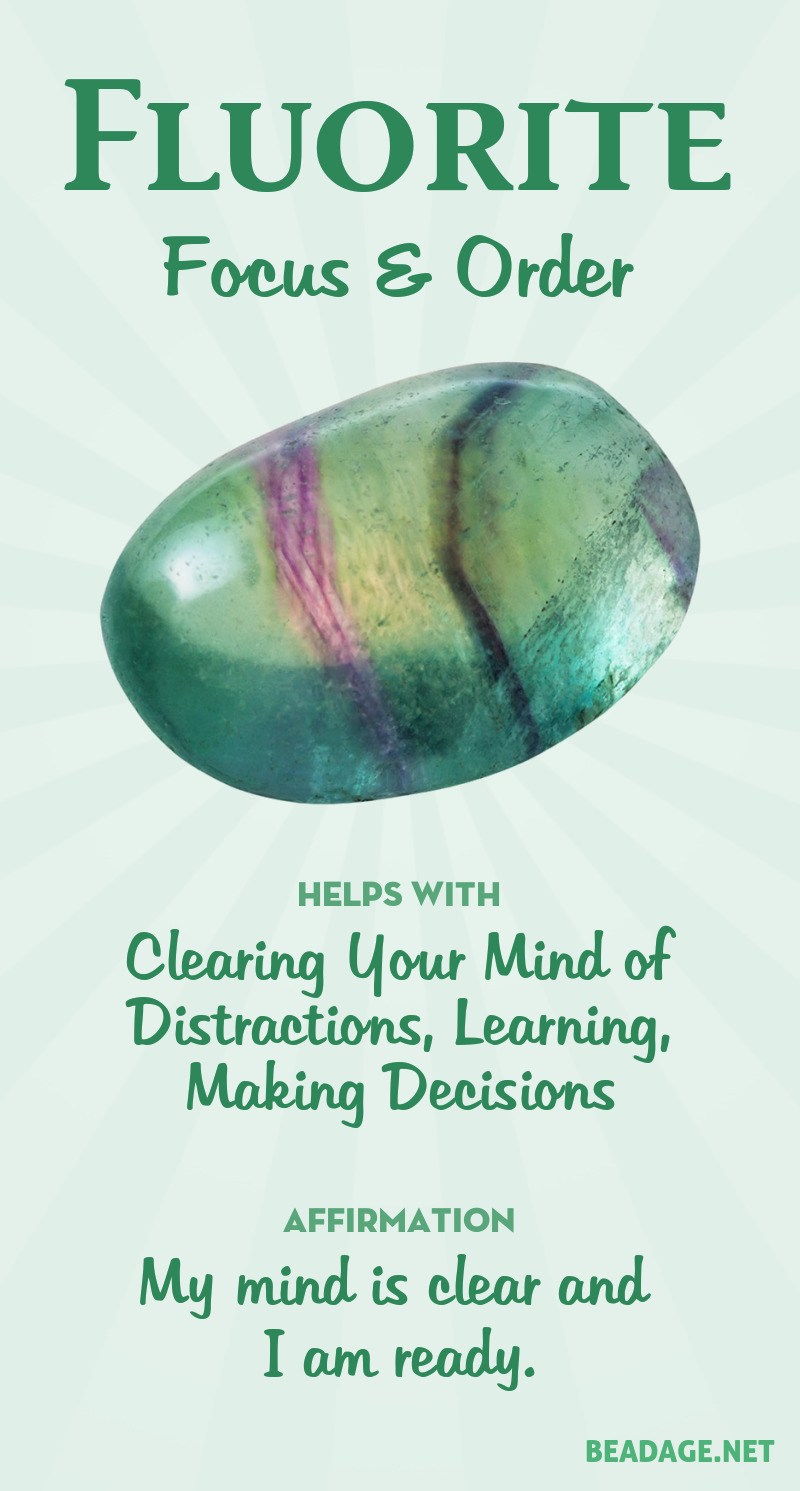
Fluorite clears and clarifies mental clutter. If you are confused and distracted by too many ideas, or worries about the future, fluorite will put your mental mess in order, enabling you to focus on what really matters. It’s a support for work that involves making subtle distinctions, or a lot of decisions in quick succession.
Fluorite helps with any and all things involving the mind, whether it is being able to focus and study, memorization, understanding complex interconnected concepts, or seeing patterns. If you are wanting to enhance your intelligence or intellectual abilities, fluorite is a good stone to wear or have in your work environment.
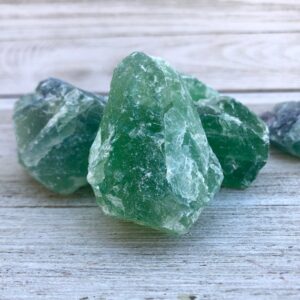
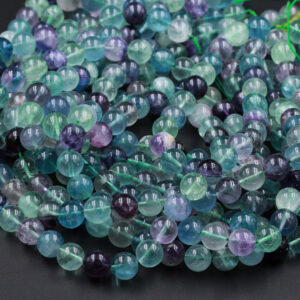
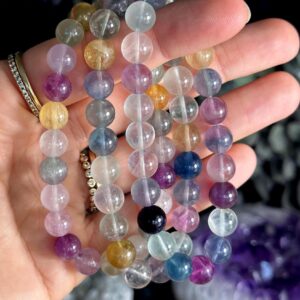
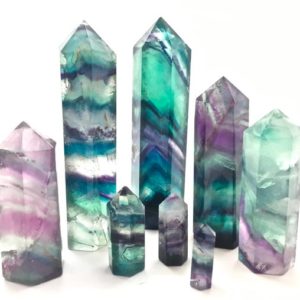
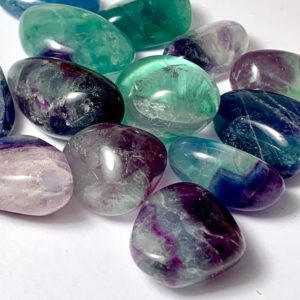
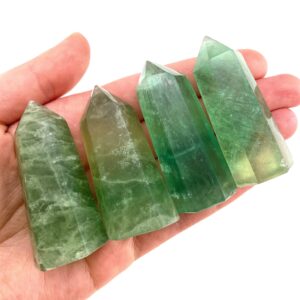
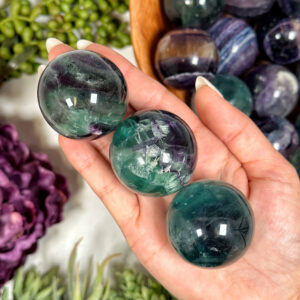
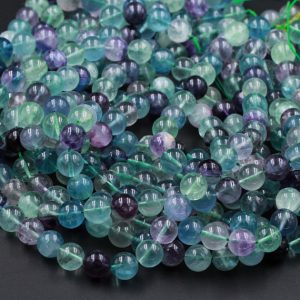
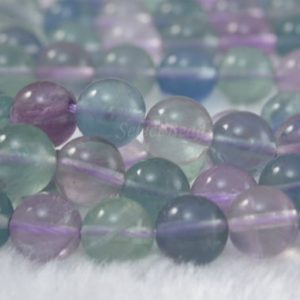
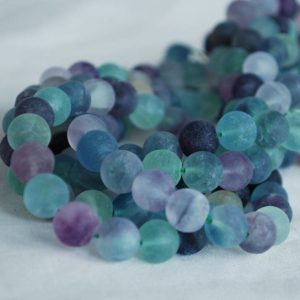
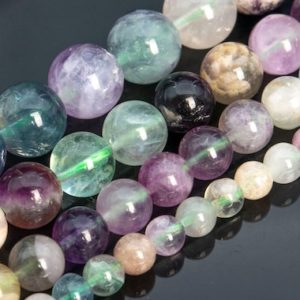
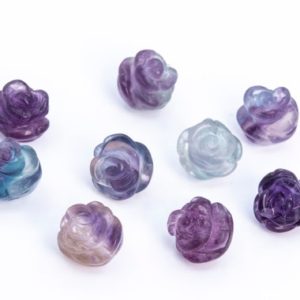
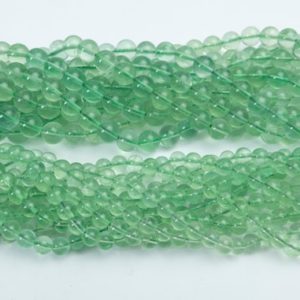
Fluorite comes in various colors and many specimens are multi-colored. You can correspond the colors with the chakras to find a piece of fluorite that will help you focus on that particular area. For example, green fluorite corresponds with the heart chakra, so it can help you find clarity in the realm of relationships and harmonize your mind with your heart. Blue fluorite corresponds with the throat chakra and helps with communication.
Fluorite as a Gemstone
About the Stone
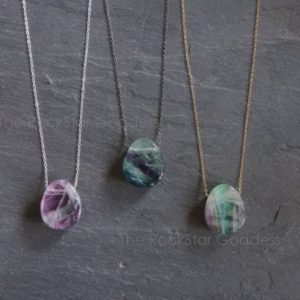
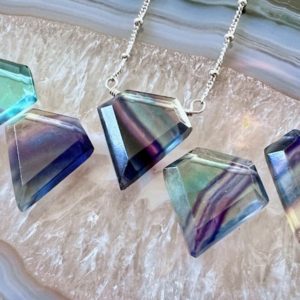
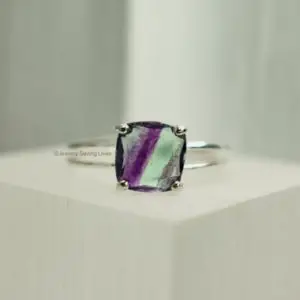
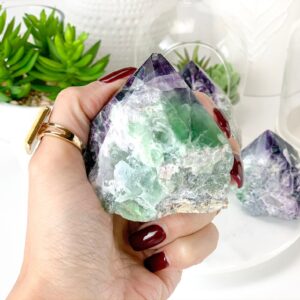
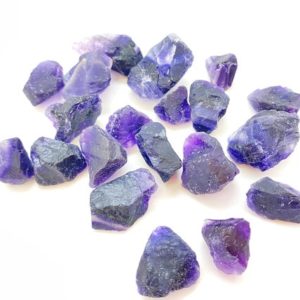
Pure fluorite is actually white or colorless, but trace minerals give it many colors. Fluorite is transparent in most cases. The most commonly recognized fluorite color is a purple-blue mix but it is also found in blue, green, red and yellow colors.
Fluorite sits at a 4 on the Mohs Scale, which is very soft. The word “flourescent” is derived from flourite. Flourescence is the property of emitting light that has been absorbed previously–in essence, glowing. Generally minerals that are flourescent absorb ultra-violet light and then emit visible light, therefore the effect can only be seen by shining a UV light (black light) on them.
Not all flourite is flourescent. Pieces harvested side by side from the same site can respond differently to black light–the effect depends on the exact mineral makeup of each specimen.
Fluorite is found in many parts of the world including Germany, Austria, Switzerland, England, Norway, Mexico, Canada (Ontario), and the U.S. The largest producer of fluorite in the U.S. is Illinois, and is in fact their state mineral. Fluorite is also found in Missouri, Oklahoma, Colorado, New Mexico, Kentucky, Arizona, Ohio, New Hampshire, New York and Texas.
Fluorite in Jewelry
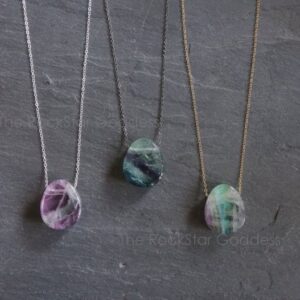
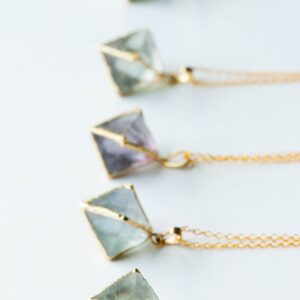
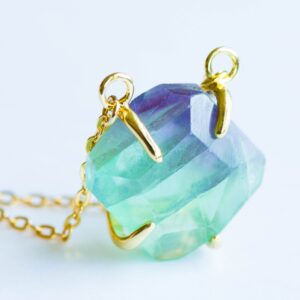
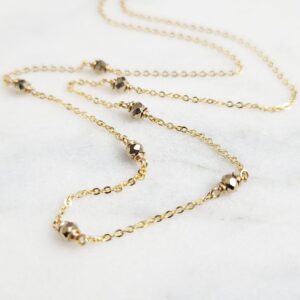
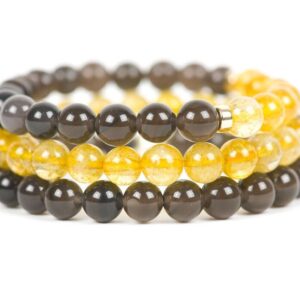
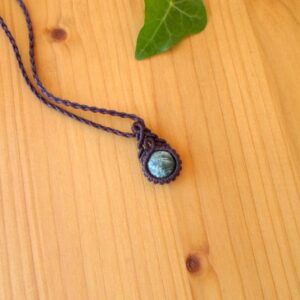
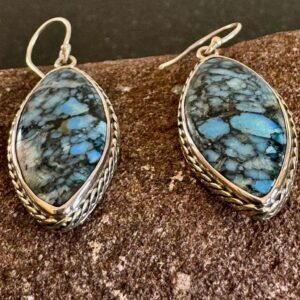
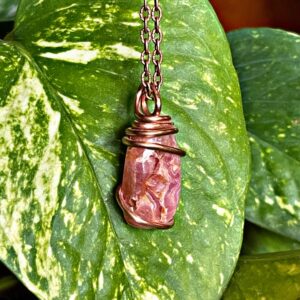
Flourite is relatively inexpensive, and surprisingly durable despite its softness, making it an excellent option for many designs.
Uses: Clarity & Focus, Creativity & Inspiration, Empaths, PurificationColor: Blue Green Gemstones