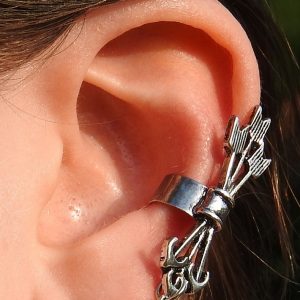
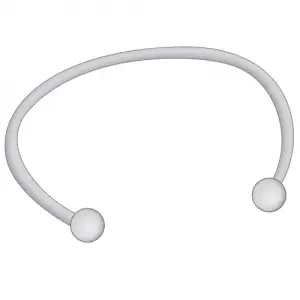
A semi-circular band of metal which clamps onto the side of the ear. A chain can be attached between the earcuff and a post earring to get the Bajoran effect.
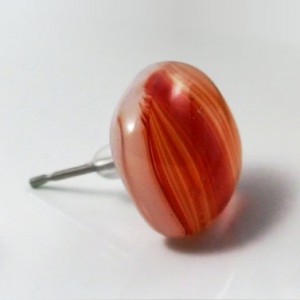
The straight part of the earring that is passed through the ear. “Post-back” earrings require a backing to hold the earring in place and can come with a flat pad to gluebeads onto, or with a metal bead with a loop under it to attach beads to (similar to hook earwires).
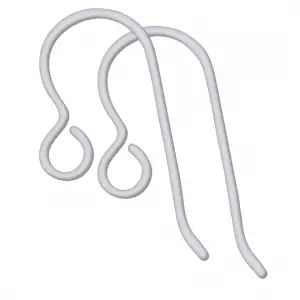
The most common commercial earwire has a coil, a metal ball, and a loop that can be opened to attach to an earring. Earwires are available in different compositions and finishes, like gold filled, silver plated, brass, or steel. Choose a color that complements your earring design.
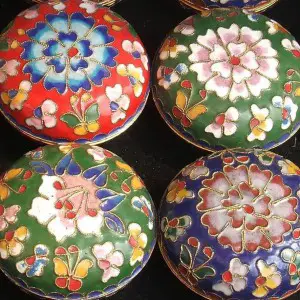
A silicone-like substance that is baked on metal, glass or ceramicbeads to apply decorative color, glossy finishes, or protective coating. Some enamel applications are detailed and contain many colors like a painted floral design. Enamel beads became widely popular during the 60s and throughout the 70s, but were not as common in the 80s and 90s. Today, enamel beads are available from almost any bead retailer and are extremely popular.
Can refer to either a half-drilled bead used to finish a length of memory wire, fastened with glue, or a short metal tube used to finish leather or suedecord and fastened either with glue or by crimping the tube onto the cord.
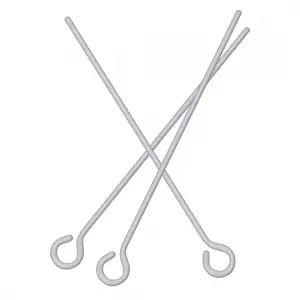
Eyepins are just like a headpins except instead of a head there is a loop. You can make these yourself out of wire – just cut a length and make a loop in one end. But if you want them super-straight you’ll have to buy them.